01
Foundation Repair
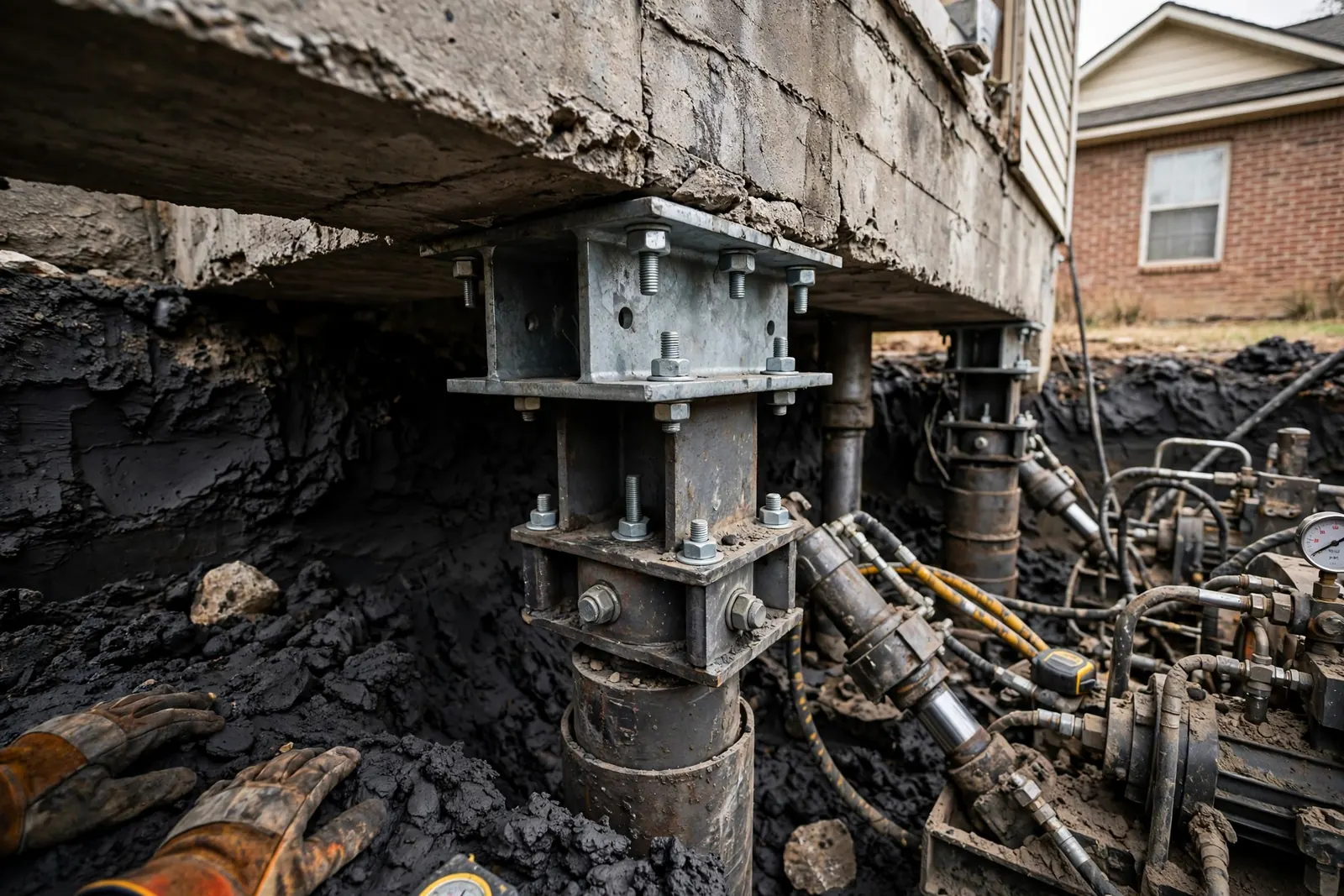
Piers under the low side, a controlled lift on hydraulics, and a floor that reads level when we are done. That is the whole job, done right.
Start with the free evaluation →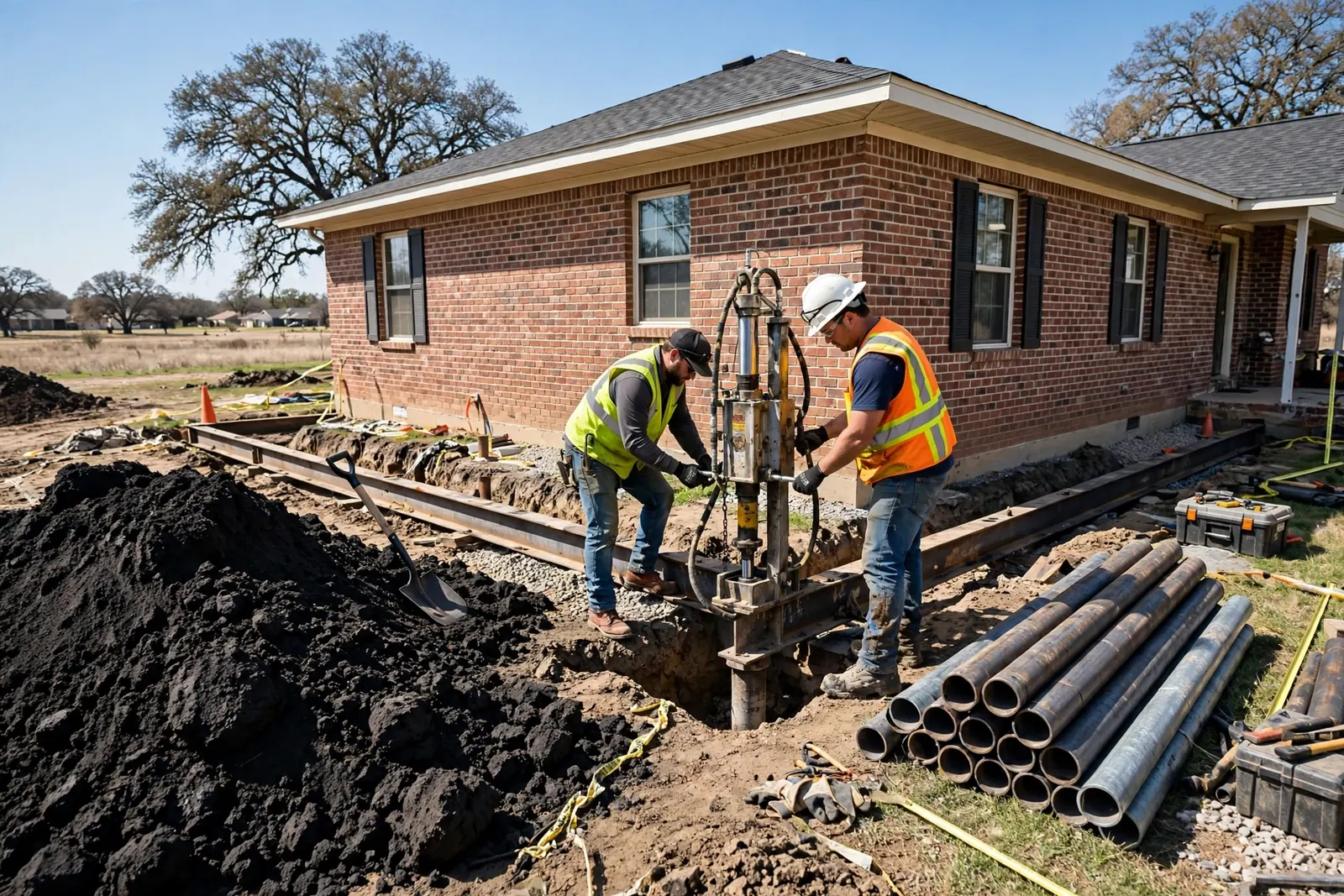
Your house is sinking. We lift it.
Burleson's black clay swells when it rains, shrinks when it dries, and takes your slab along for the ride both ways. We drive steel piers down past that clay, lift the house back where it belongs, and hand you the readings to prove it.
Call (817) 555-0100One crew answers. Not a call center, not a lead site.Get a Free Evaluation
We measure the whole floor, show you the numbers, and quote it flat. It costs you nothing.
Foundation repair in Burleson comes down to one thing: getting support under your house that the moving clay cannot reach. That is the work we do in Burleson, Crowley, Joshua, Alvarado, Cleburne and Mansfield. The evaluation is free, the quote is flat and in writing, and the crew that measures your floor is the crew that lifts it. One crew answers our phone. Not a call center, not a lead marketplace, not a list of bidders. You call Ironroot, Ironroot shows up.
Before anybody sells you a pier, somebody should measure your floor. That is where every Ironroot job starts: a free evaluation with elevation readings taken across every room, written down where you can see them. A floor that reads flat does not need piers, and we will tell you that to your face and go home. A floor that has dropped tells us exactly where it dropped, how far, and what it takes to bring it back. The plate below is how a slab survey reads. The contour lines show where the floor sits high and where it has settled. On your evaluation we draw the same map of your house, with your numbers on it. Those numbers decide the quote. Not a sales script, not a guess from the driveway. The numbers. Use the checker under the plate. Mark the signs you can see in your house and it will tell you honestly whether you are looking at normal wear, something to watch, or a floor that needs measuring now.
Tap every sign you can honestly see in your house. The verdict is the same one we would give at your door: cosmetic, watch it, or measure it now.
Eight jobs, one crew, all of it under or around your foundation. If a job does not need doing, we do not sell it. The readings decide, and you see the readings before you see a price. Every job below follows the same order: measure first, quote it flat, then do the work and measure again before we backfill a single hole. Start with the job that matches what your house is doing, or start with the free evaluation and let the floor tell us which one it is.
Piers under the low side, a controlled lift on hydraulics, and a floor that reads level when we are done. That is the whole job, done right.
Start with the free evaluation →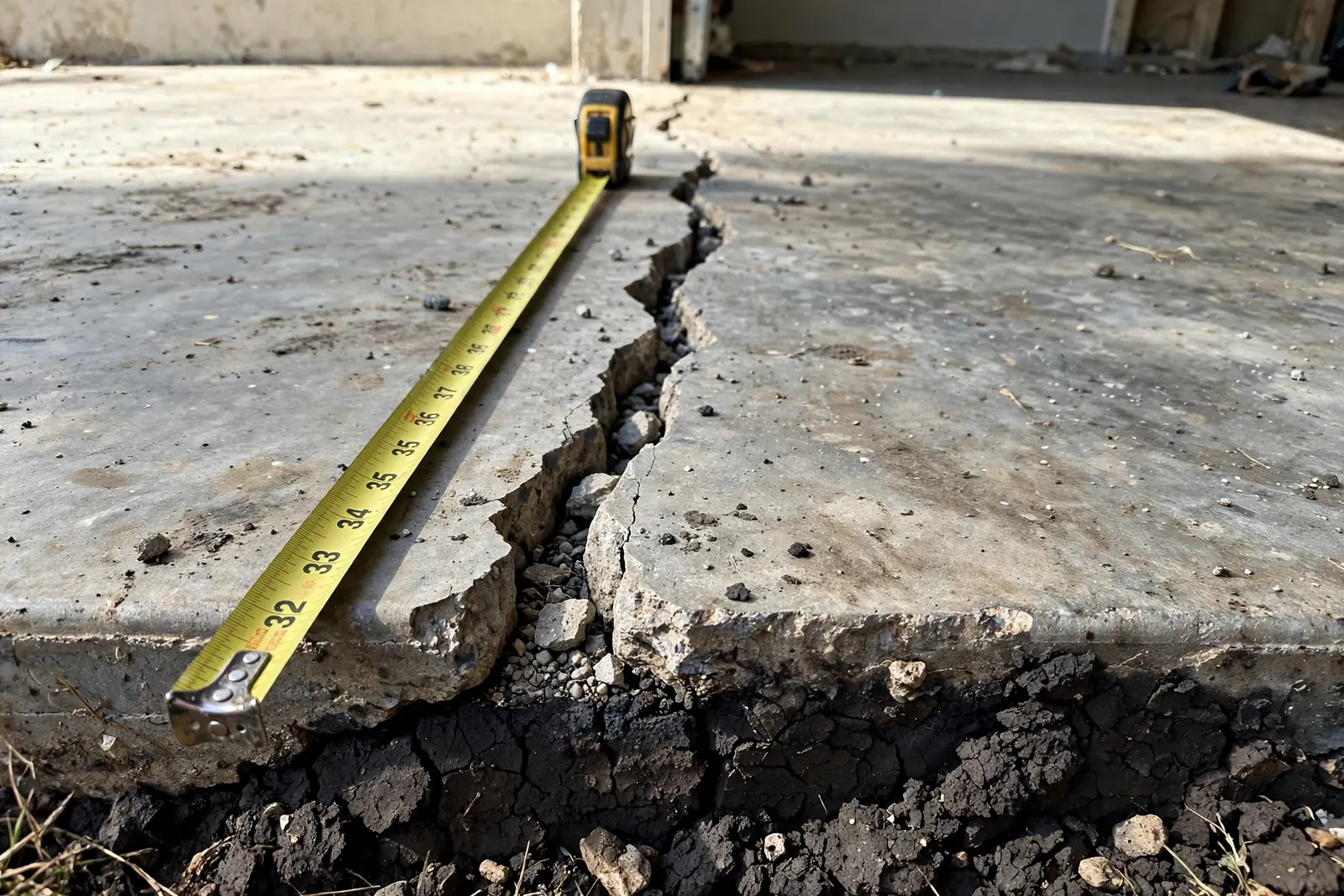
Sunken slab sections lifted and locked onto piers. Every crack mapped before we start and checked again after the lift.
Slab repair →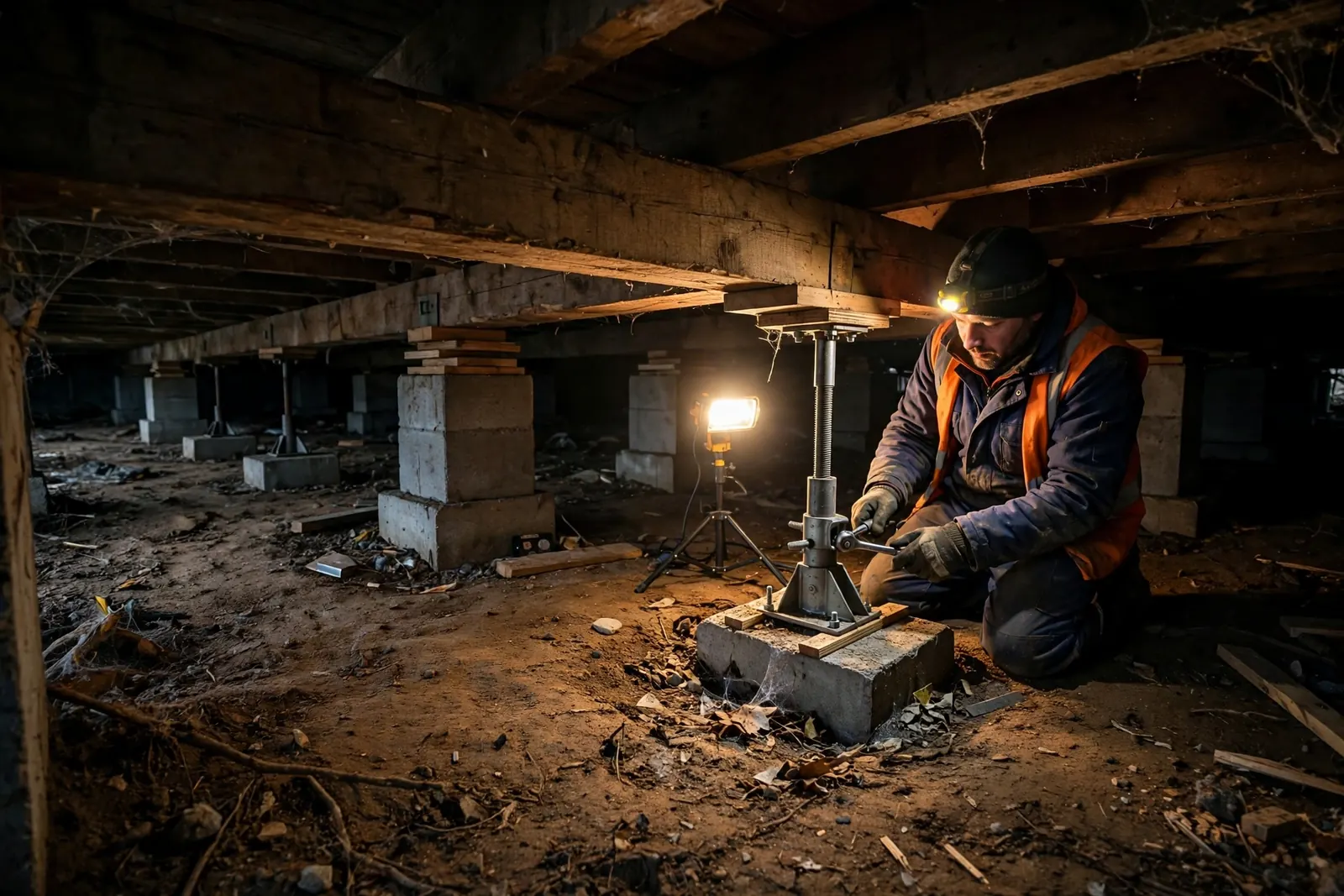
Bad beams out, new beams in, steel supports set and floors re-leveled from underneath. Crawling under houses is the job. We do it.
Pier and beam →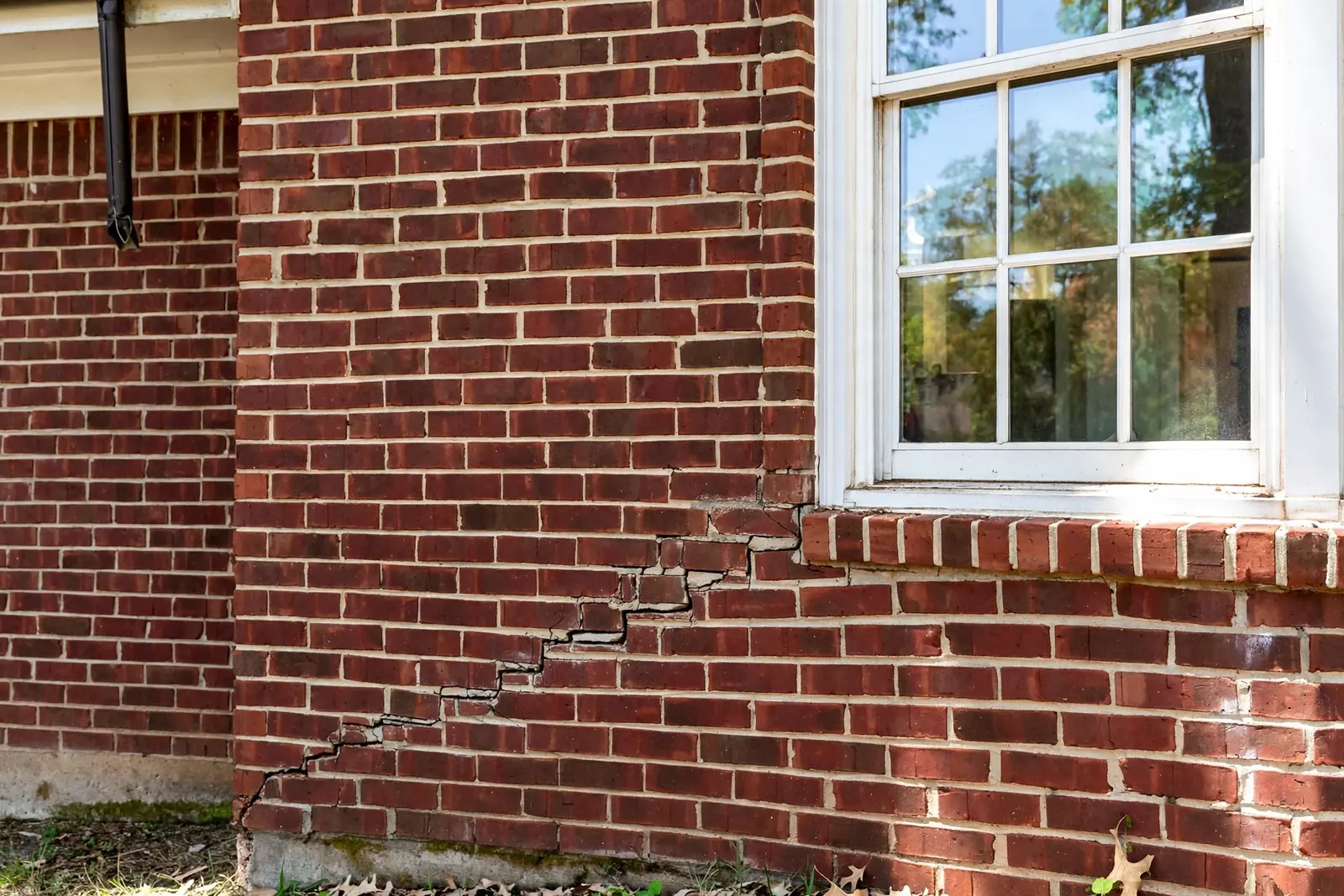
A brick crack is a symptom, not the disease. We stop the movement first, then we seal the crack. In that order, or do not bother.
Crack repair →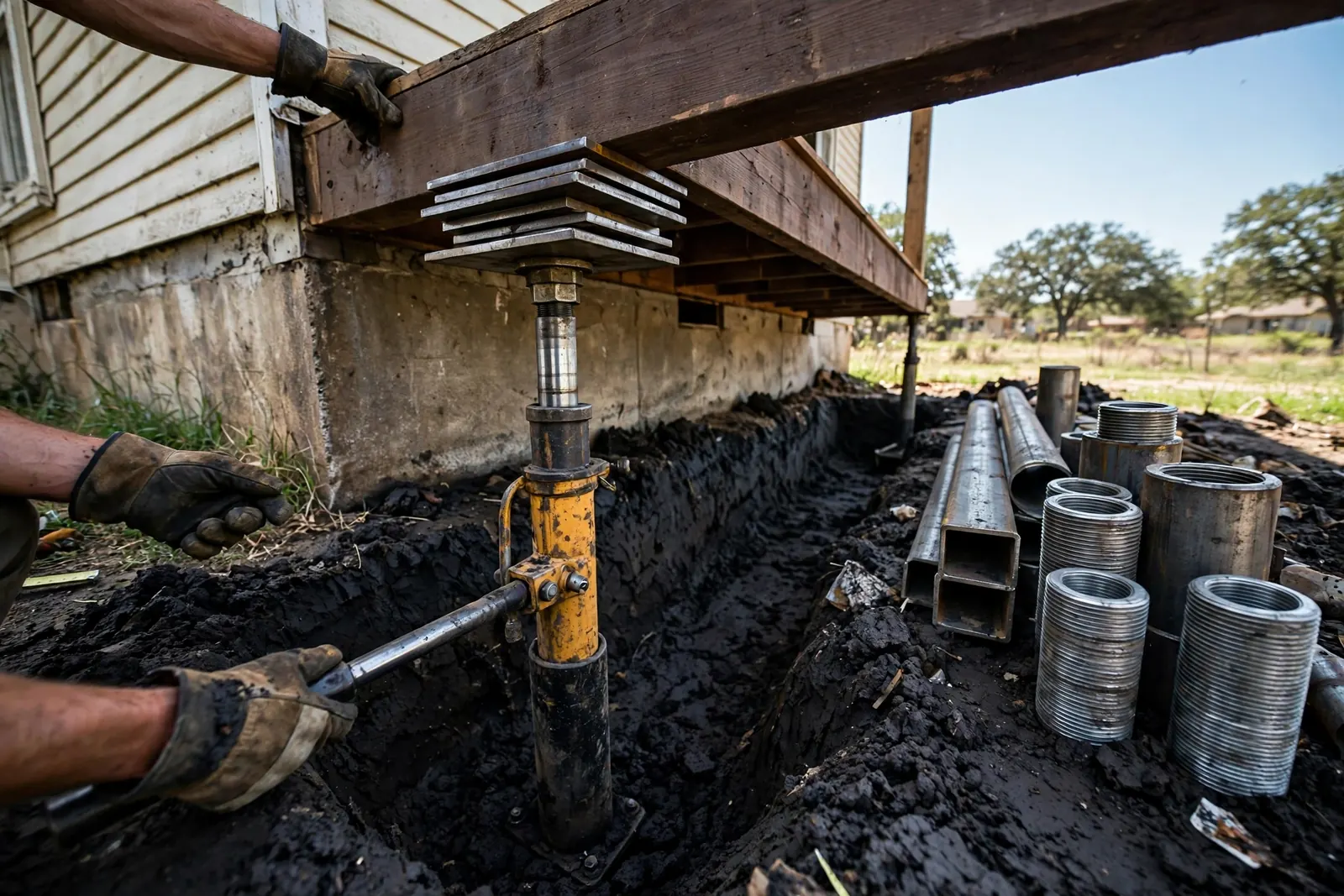
The whole house brought back to level, room by room, reading by reading. Doors close again. Floors stop sloping. Done.
House leveling →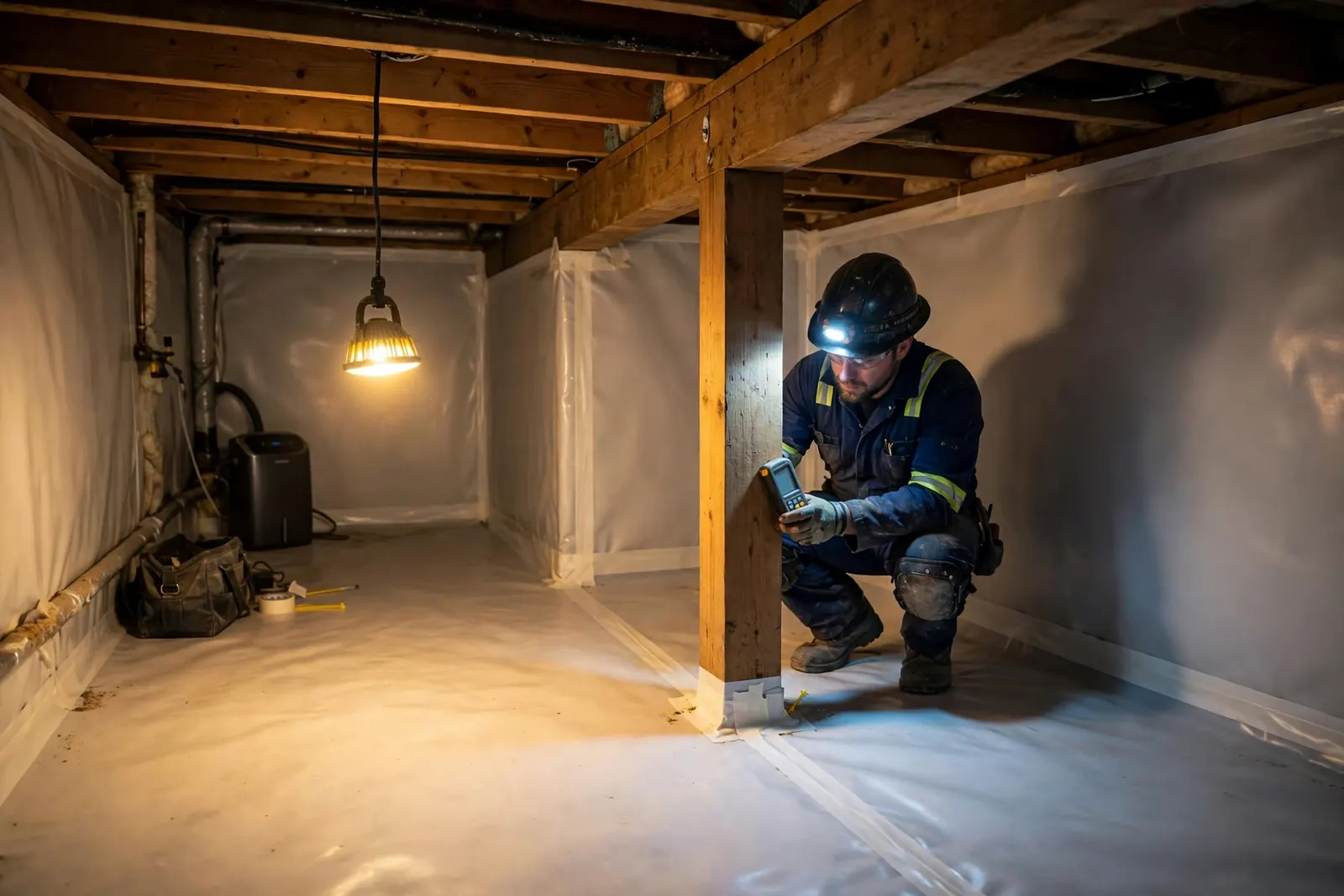
Supports, beams and a sealed liner over the dirt. A dry crawl space means the structure above it stops rotting.
Crawl space →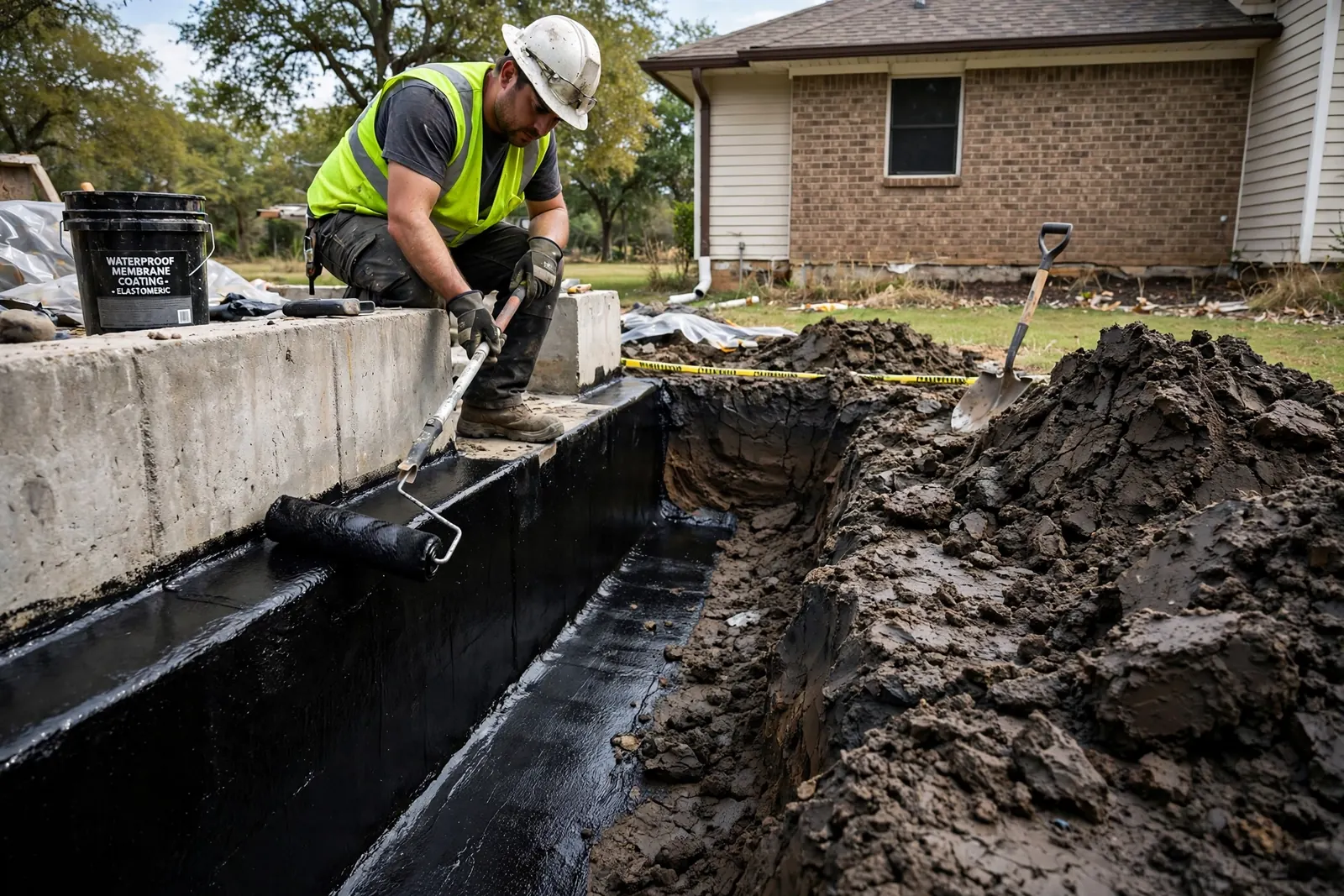
Membrane on the wall, water off the foundation. Wet soil pressed against concrete is how slabs get moved in the first place.
Waterproofing →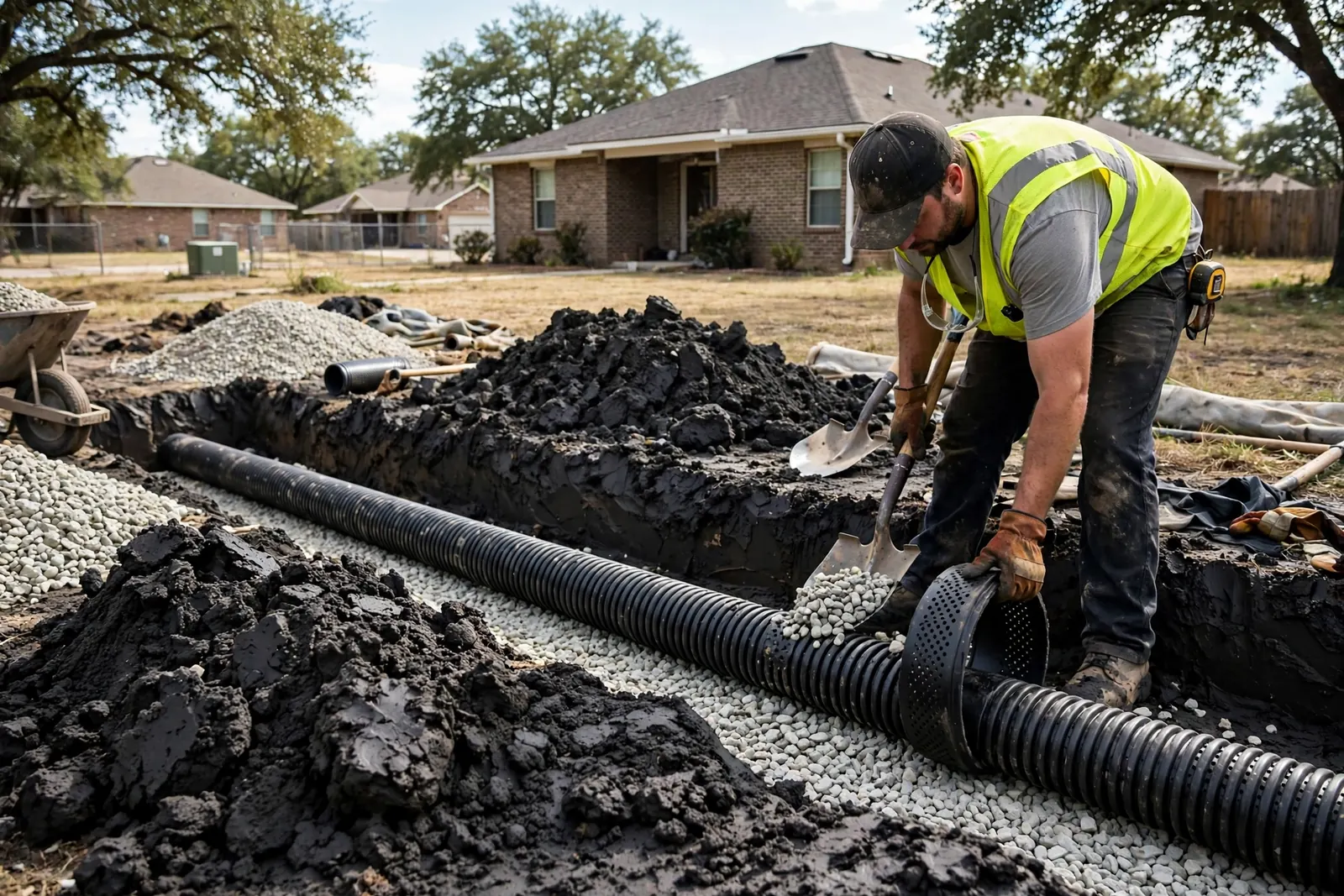
Water is the cause. Drains are the cure. We dig the trenches nobody wants to dig and grade the yard so water leaves.
Drainage →Three pier systems hold up the houses we repair. Your soil, your house and your budget pick the right one. We install all three, and we will tell you plainly which one your readings call for, and why. The plate under the cards is a pier in cross-section: the footing of your house, the bracket that locks the pier to it, and the segments driven down through the black clay to ground that does not move with the weather. That last part is the whole point. Clay near the surface can heave and shrink several inches across a Texas year. Ground deep enough does not care what season it is.
Driven deep to load-bearing ground and locked to the footing with a steel bracket. Our go-to for heavy slab homes on deep clay.
Concrete segments pressed section by section, using the weight of your own house, until the ground says stop. Proven all over North Texas.
Screwed into the ground where soil is soft or access is tight. The torque reading tells us the moment they are seated for good.
Burleson's clay moves houses slowly, then all at once. These are the tells we look for on every evaluation. One crack by itself might be nothing. A pattern is the house telling you the ground moved.
Stair-step cracks climbing through your brick
Doors that stick one season and swing free the next
Cracks splitting out from the corners of windows
Floors you can feel sloping under your feet
Gaps opening at the ceiling, the cabinets, the trim
Slab and garage cracks that keep growing
Wet summers swell this clay and dry ones shrink it, and the slab rides both ways until something anchors it. Some of these signs are cosmetic. Some mean a corner of the house is dropping. You cannot tell which from the driveway, and neither can we. That is why the measurement is free and the verdict comes from the instrument, not from a guess.
Burleson sits on the Blackland Prairie, a band of deep, dark clay soil that runs through the middle of North Texas. Builders here have put slab after slab on it for fifty years, and the clay has been moving those slabs for just as long. In a wet spring the clay drinks water and swells, pushing up on the slab. In a dry August it shrinks and pulls away, and the slab drops into the gap. Corner by corner, season by season, that cycle is what cracks brick, rack doors and split drywall across this town. The fix is not stronger concrete on top of the same moving dirt. The fix is reaching through the clay to the stable ground underneath it and putting the house on that. Piers do exactly that. Drainage does the other half of the job, keeping water from pooling against the foundation and feeding the swell in the first place. Every evaluation we run checks both: where the floor sits, and where the water goes. If you want the full story of what this soil does, we wrote it out in our guide to expansive clay soil in North Texas. It is the same explanation we give at kitchen tables all over Johnson and Tarrant County, with the drawings to match.
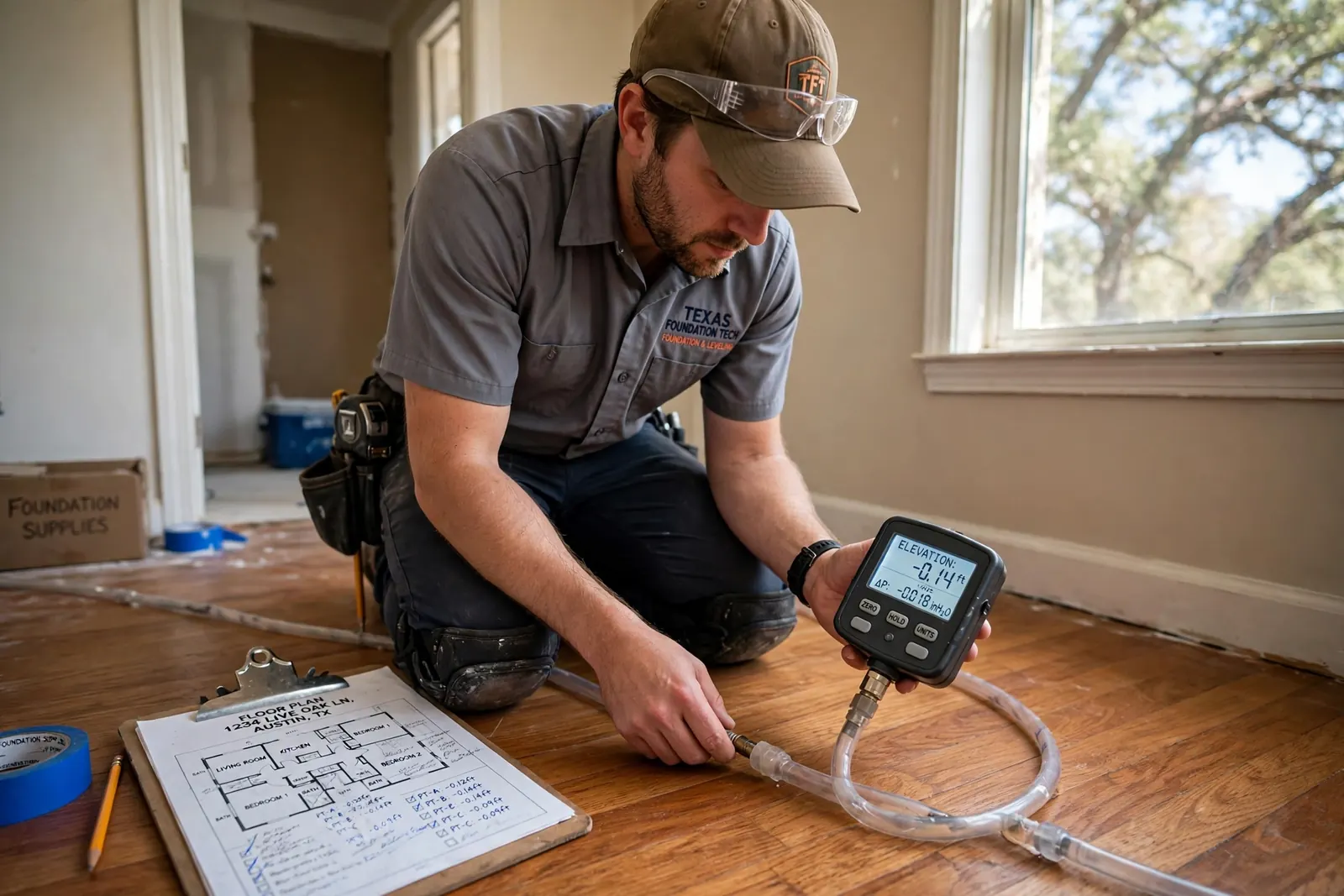
Foundation work has a reputation for open-ended quotes and surprise add-ons halfway through the dig. We run it the other way. Four steps, and the price is settled in writing at step two, before a shovel touches dirt.
Every room, every reading, on paper. You see the same numbers we see before anybody talks price.
One price, in writing, before a shovel touches dirt. It does not creep halfway through the job.
Piers driven to refusal, the lift done on hydraulics, and the floor re-measured before we backfill a single hole.
Lifetime warranty on the pier work. It stays with the house when you sell, and the transfer costs nothing.
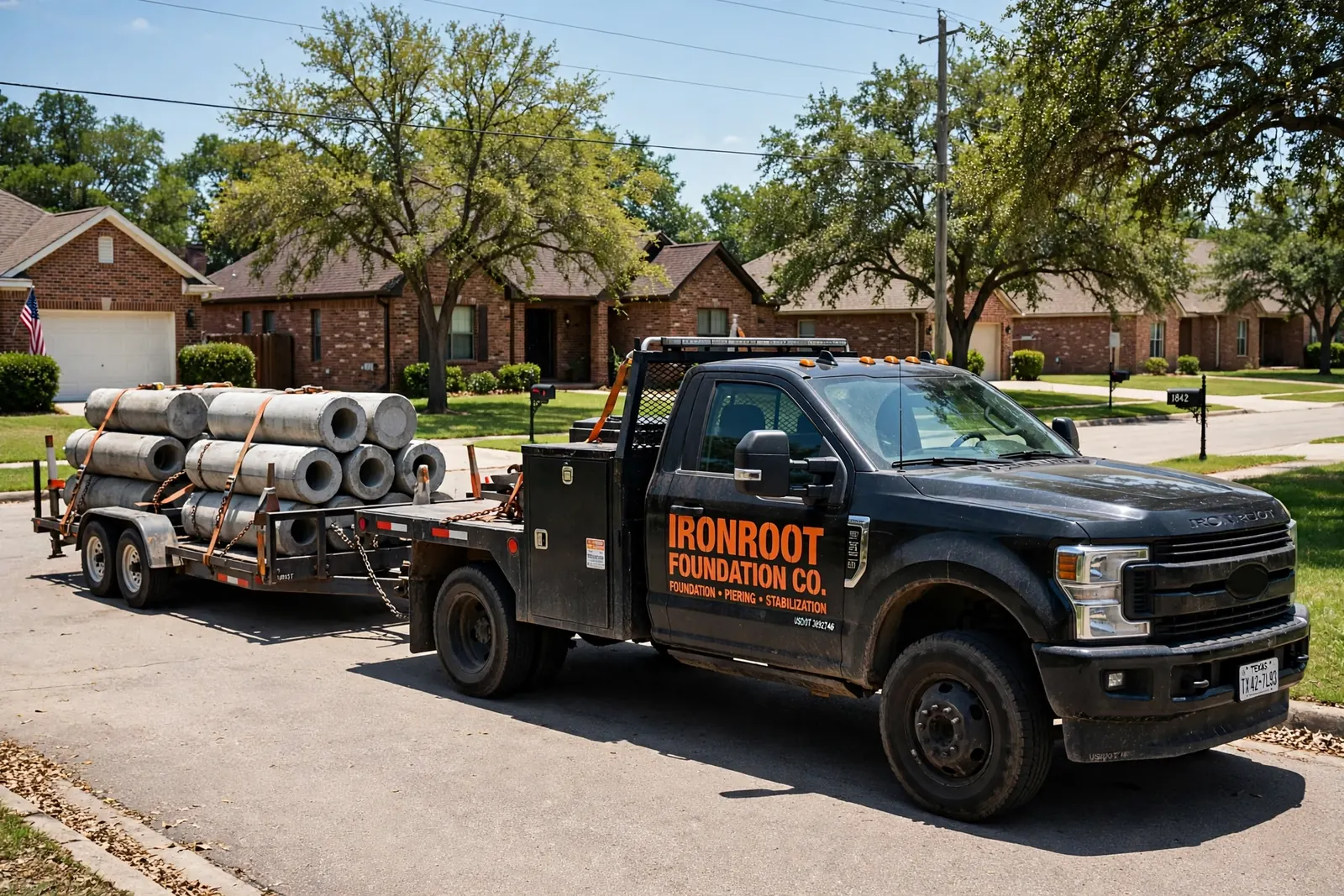
One crew. No marketplace.
Call Ironroot and Ironroot shows up. We do not buy your call from a lead site, and we never sell it to anyone else. The number on the truck is the number that answers.
We are a Burleson crew, and we work the towns Burleson actually touches: Crowley and Joshua to the north and west, Alvarado down Highway 67, Cleburne out in Johnson County, and Mansfield up the 287 corridor. Same clay under all of it, same crew on every job. Each town gets its own page below, written for that town: its soil, its housing stock, and the failures we actually see there. If your town is not listed, call (817) 555-0100 and ask. If we can reach you with a full crew and do the job right, we will say so.
BurlesonHome base. Blackland clay under all of it, from Old Town pier and beam to the new slab subdivisions out toward Rendon.MansfieldThe biggest floors in the footprint: two-story brick slabs in the master-planned waves, piered at Mansfield scale.JoshuaSubdivision slabs along FM 917 and pier and beam country homes on the roads out, septic systems and big oaks included.AlvaradoOlder stock near the square, additions on shallow footings, and newer slab growth along Highway 67.CleburneThe county seat's three eras: historic pier and beam, mid-century ranch, and modern slabs toward Lake Pat Cleburne.CrowleyOne growth wave of slab subdivisions, aging in formation, corners dropping street by street along Crowley Road.Here is what happens when you call most of the names that come up in a search. Your details get sold or shared, three or four companies call you back, and you spend a week hosting sales visits and comparing quotes written to be impossible to compare. Angi and HomeAdvisor run exactly that business in this market, with hundreds of pros paying for a piece of every call. We do not buy calls, and we never sell them. The number on this site is our number. The crew that answers it is the crew that measures your floor, quotes it flat and drives the piers. One company is accountable for your house from the first reading to the last, and that company is us. When the work carries a lifetime warranty, you want to know exactly whose warranty it is. Ours.
It depends on the pier count and how far the house has dropped, which is exactly what the free evaluation measures. Our foundation repair cost guide lays out the typical North Texas ranges per pier and per job, in plain numbers. Your quote is flat, written, and does not change once we start digging.
Maybe not. If your floor reads level and the cracks are cosmetic, we say so and go home. We would rather be the company that told you the truth than the one that sold you steel you did not need. Drainage fixes some houses all by itself, and it costs a lot less than piers.
Most houses take one to three days, and you live in the house while we work. It gets loud for a few hours at a time. Then it is done, the floor reads right, and the holes are backfilled and graded.
Our pier work carries a lifetime warranty, in writing. If a piered section moves again, we come back and adjust it. The warranty stays with the house when you sell, at no transfer fee, and your pier map and readings stay on file with us so the next owner gets the whole record.
Often, yes, at least partway. Lifting a dropped corner back toward level closes many brick and drywall cracks on its own. What is left, we seal after the movement is stopped. Sealing a crack without stopping the movement first is painting over a problem that is still moving.
Watering helps a slab ride the dry season with less movement, and we will show you how to set up a soaker routine if your soil needs one. But watering cannot lift a corner that has already dropped, and it cannot hold a house that has lost support. It is maintenance, not repair.