Foundation Repair in Cleburne, TX
Cleburne is the Johnson County seat and the oldest housing stock in our footprint, and old stock makes for interesting foundations: Victorian-era pier and beam near the courthouse square, mid-century neighborhoods rolling out from downtown, and modern subdivisions at the edges, including the lake side toward Lake Pat Cleburne. Foundation repair in Cleburne, TX means reading all three eras honestly and fixing each the way it was built to be fixed.
We come over from Burleson, about twenty minutes up Highway 67, and we treat Cleburne like the hometown it is to a lot of our crew's extended family: free elevation survey, the contour map in your hands, flat written quote, lifetime warranty on pier work. The metro companies serve Cleburne from Dallas and Fort Worth with metro pricing and a rotating cast. We are the nearby crew, and we plan to keep being recommended at the courthouse square coffee shops, which is a stricter standard than any ad.
The historic stock
Cleburne's older neighborhoods, the streets around the square and along Anglin and Henderson, hold homes that have stood on pier and beam for a hundred years or more. Their foundations are a living record: original bois d'arc or cedar posts in the oldest, concrete block and base in the replumbings of later decades, beams repaired in layers by generations of carpenters. What fails is rarely dramatic. Supports settle into the clay by fractions, posts rot at ground contact, and floors develop the gentle topography old-house owners describe as character until a door will not close at all. Our approach under these houses is conservative by design. The survey maps the floor; the crawl space pass documents every beam and support with photos; and the repair replaces only what has failed, resets what has sunk, and levels to a line the old framing can honestly reach. These houses have earned careful hands, and the transferable documentation we leave, readings, pier map, warranty, matters at resale in a historic market where buyers ask hard questions.
The newer Cleburne
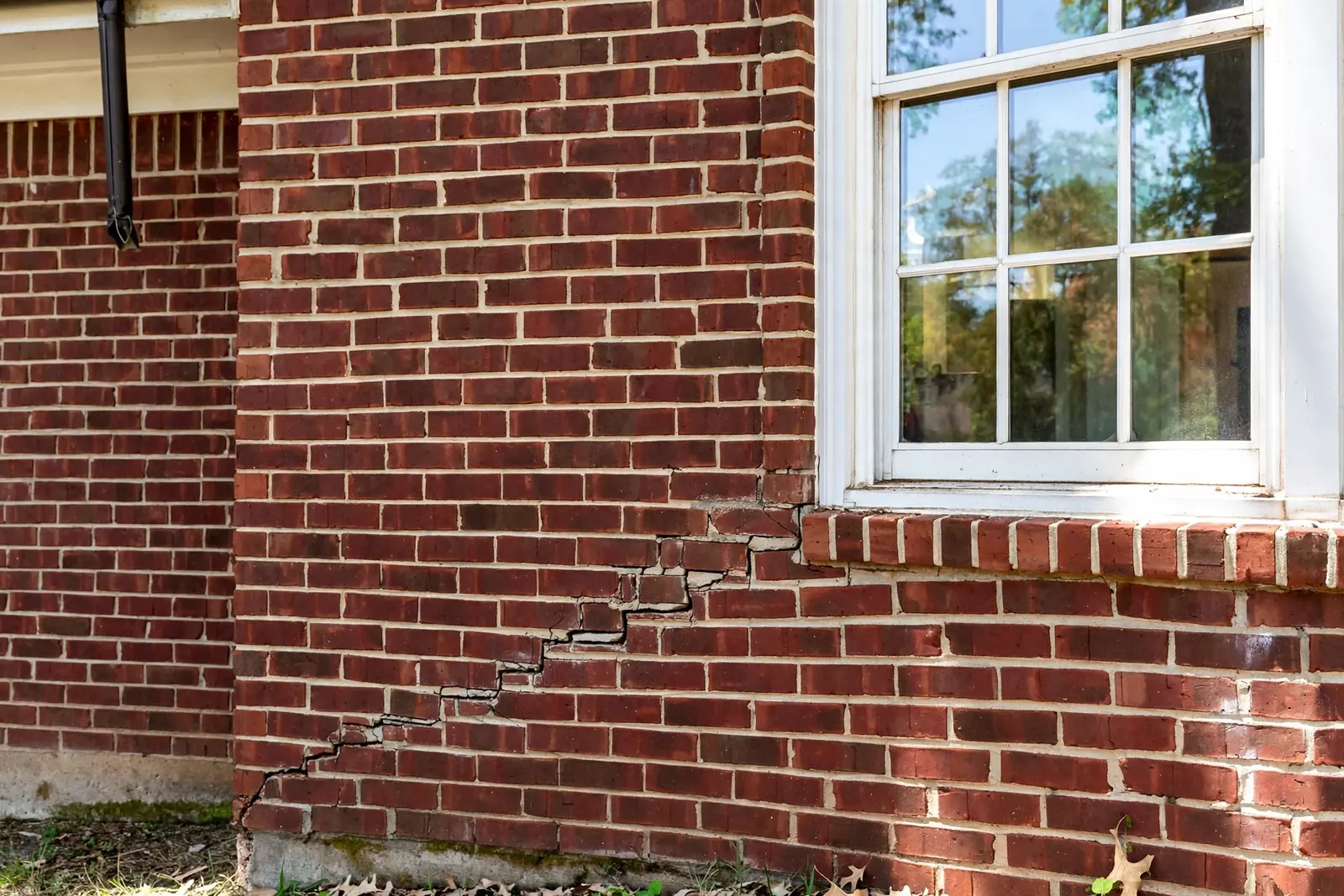
East and south Cleburne, toward the lake and along the newer arterial roads, is modern slab construction, and it behaves like the rest of the footprint: blackland clay with a high shrink-swell rating, edge drop in the dry years, downspout corners, brick cracks arriving in the first decade. The lake side adds its own wrinkle, higher ambient moisture and lots that drain toward the water unevenly, which keeps one side of those slabs cycling harder than the other. Drainage design on lake-area lots is part of most quotes we write there, because the water story is the foundation story. Mid-century Cleburne, the ranch stock between the square and the subdivisions, splits between slab and pier and beam and gets read house by house. Whatever the type, the sequence never changes: measure, map, quote flat, then fix.
There is also a documentation habit worth copying from Cleburne's careful homeowners: many of them keep a house file, decades of receipts, surveys and repair notes in one folder. When we work on a house with a file like that, the survey starts from evidence instead of memory, and the work we add to the file, maps, readings and photos, makes the next decision easier for whoever owns the house next. Start the file with your free survey. Old houses reward owners who keep records.
What Cleburne calls about
Wavy, sagging floors in the historic stock lead the list, followed by the classic slab corner drop in the newer areas and the crack patterns that come with it: stair-steps in brick, seams over doors, the garage separation. We also get the pre-purchase calls, because Cleburne's market turns over a lot of older homes, and a measured inspection during the option period is the difference between negotiating with facts and finding out after closing. Our foundation inspection page describes exactly what that visit covers, and it is free, with the map yours to keep whichever way the deal goes.
Cleburne homeowners also ask the question we wish every town asked: what happens if we do nothing for now? On the historic pier and beam stock the honest answer is that nothing dramatic happens soon. Floors keep sloping a degree at a time, plumbing joints strain, doors drift further out of true, and the eventual correction grows a little more expensive every year. Sometimes a monitored wait is genuinely the right plan: readings on file, a recheck in a year, work when the numbers say so. We will tell you when waiting is safe and when it is just expensive procrastination, and the baseline survey that makes waiting an informed choice instead of a gamble is free.
Straight Answers
Questions from Cleburne homeowners
My house is over a hundred years old. Can its floors really be leveled?
To a line the framing can honestly hold, yes. Old framing has settled into its shape, and forcing it to a modern laser line can crack more than it cures. The survey shows us where the realistic target is, and we quote to that target in writing. Owners of historic homes usually care less about perfection than about stability, doors that work and documentation, and that is what we deliver.
Does pier work hurt a historic home's value?
Documented, warrantied pier work helps it. Buyers of older Cleburne homes expect foundation history; what scares them is undocumented movement. A transferable lifetime warranty with before-and-after readings turns the foundation from a question mark into a selling point.
The lake side of my lot stays wet. Is that the cause?
It is a contributor with a name: uneven moisture. One side's clay stays swollen while the other side cycles, and the slab bends between them. The fix usually pairs piers under the dropped sections with drainage that balances the moisture, and our evaluation reads both before recommending either.
What We Do Here
Foundation Services in This Area
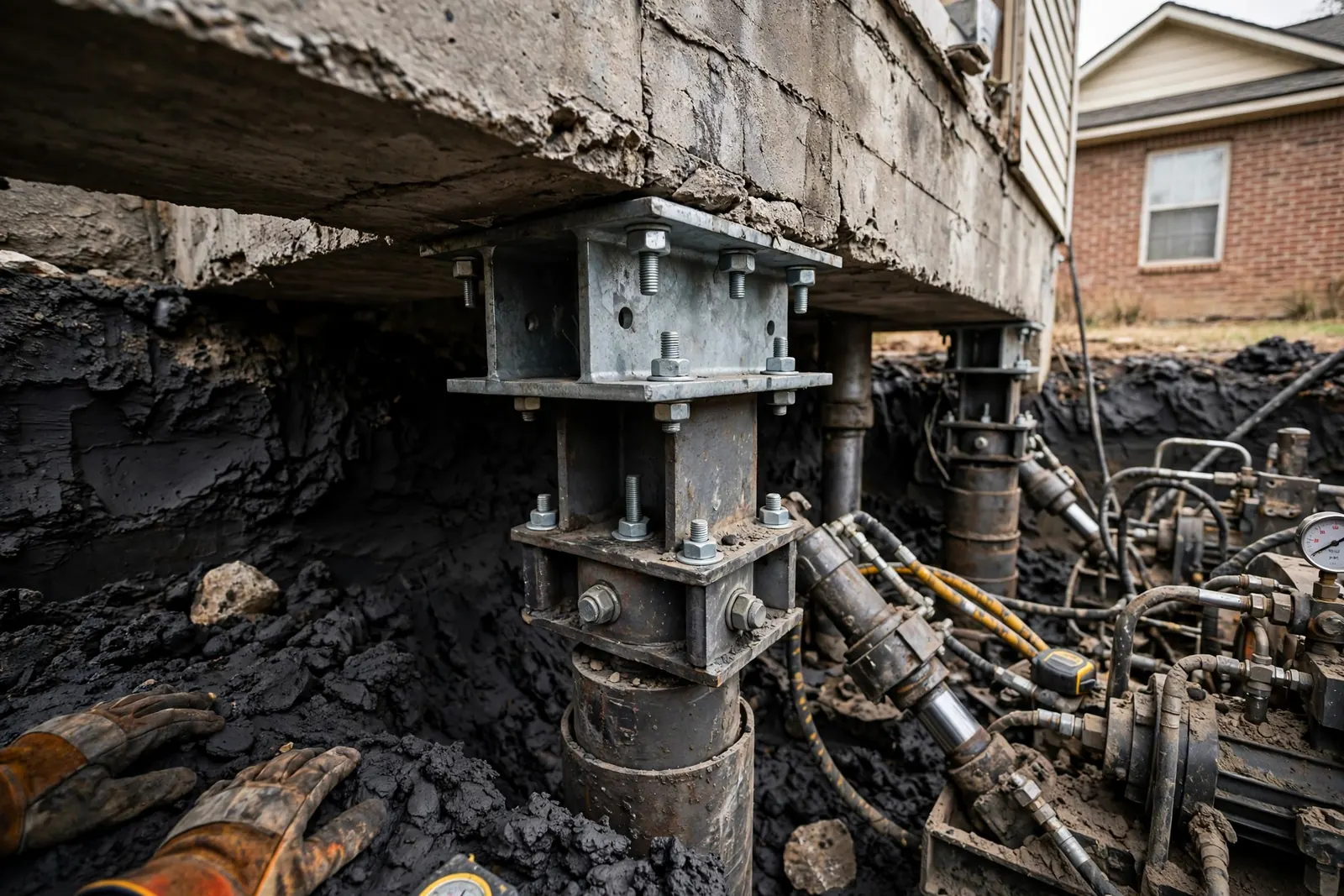 Foundation RepairPiers under the low side, a controlled lift on hydraulics, and a floor that reads level when we are done. That is the whole job, done right.
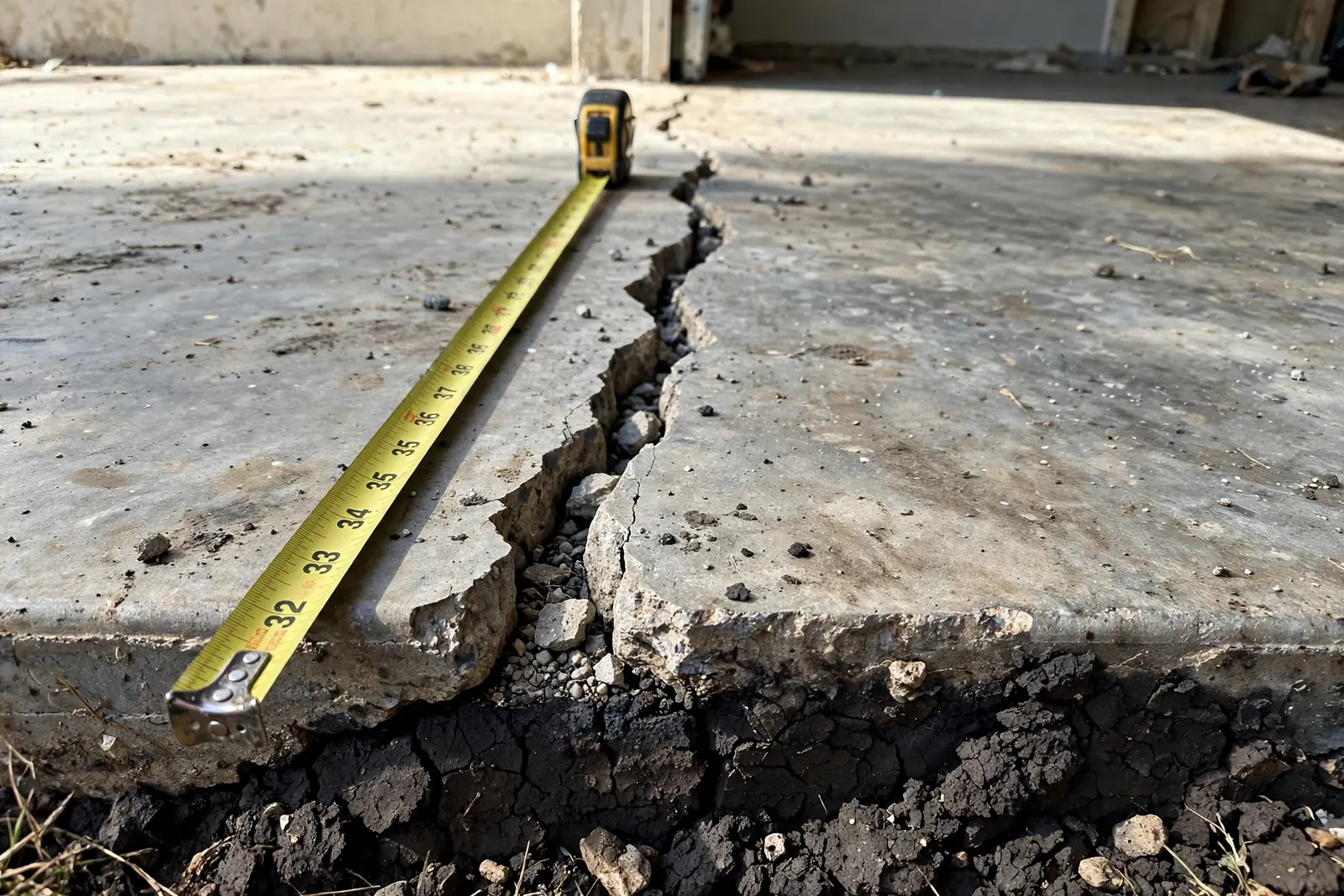 Slab RepairSunken slab sections lifted and locked onto piers. Every crack mapped before we start and checked again after the lift.Crack RepairA brick crack is a symptom, not the disease. We stop the movement first, then we seal the crack. In that order, or do not bother.
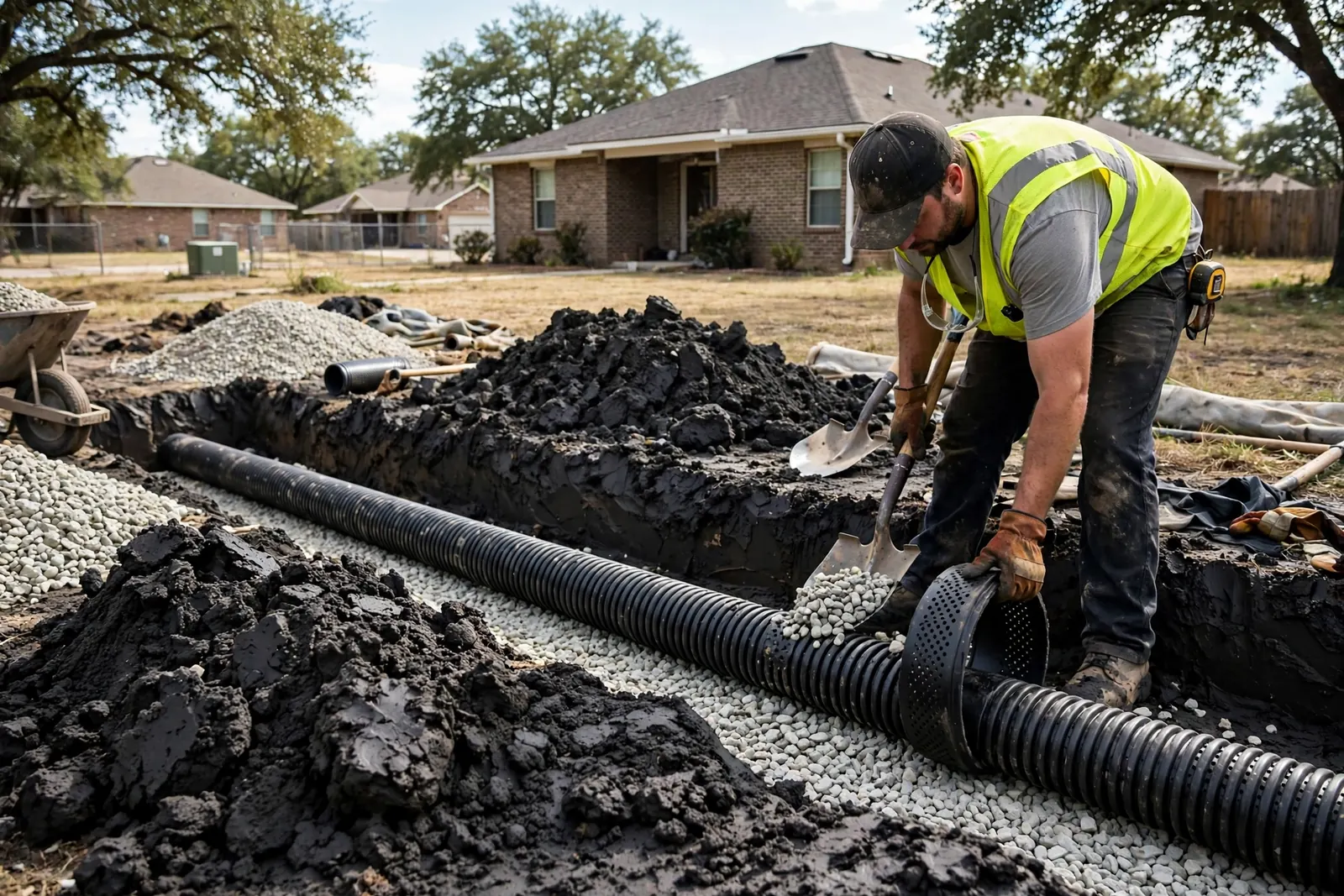 Drainage & French DrainsWater is the cause. Drains are the cure. We dig the trenches nobody wants to dig and grade the yard so water leaves.
Foundation Help in Cleburne
Tell us what the house is doing and we will call you back to set the free evaluation. Prefer to talk? Call (682) 439-9099.
Get a Free Evaluation
We measure the whole floor, show you the numbers, and quote it flat. It costs you nothing.