Slab Foundation Repair in Burleson, TX
Most of Burleson sits on slab. When that slab drops at a corner or sags along a wall, slab foundation repair in Burleson, TX means one thing: putting piers under the low sections, lifting them back toward level on hydraulics, and locking them there on ground the clay cannot move.
Serving Burleson · Mansfield · Joshua · Alvarado · Cleburne · Crowley
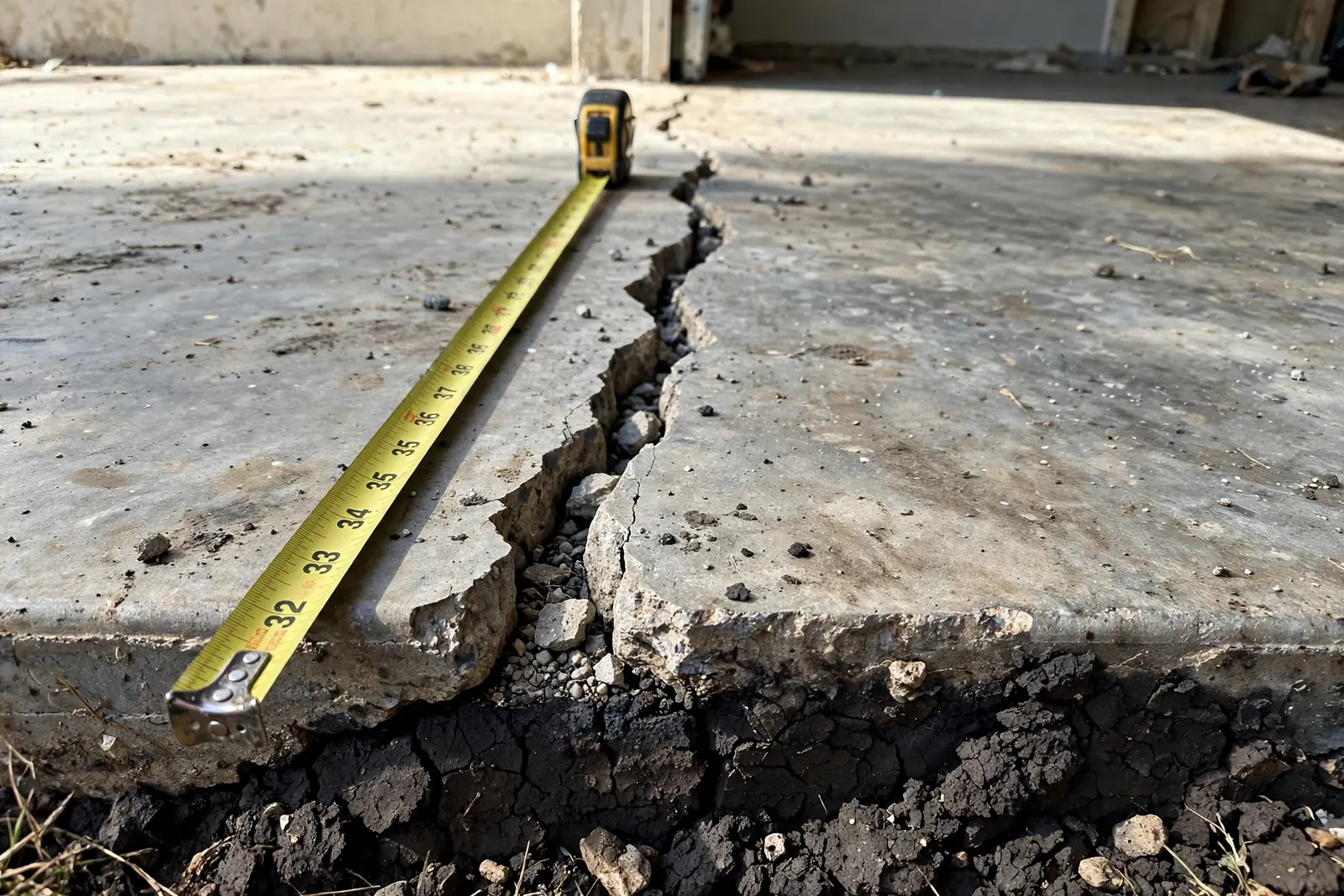
A slab does not drop for no reason. Under every slab in this town is blackland clay that swells when it is wet and shrinks when it dries. A dry summer pulls the soil away from the slab's edge, the edge loses support, and gravity does the rest, a fraction of an inch at a time. You notice it as a door that starts to drag, a crack that opens along a tile line, a room that feels like it tilts. The slab is telling you where it lost the ground. We measure it, pier it, and lift it.
Exterior piers and interior piers
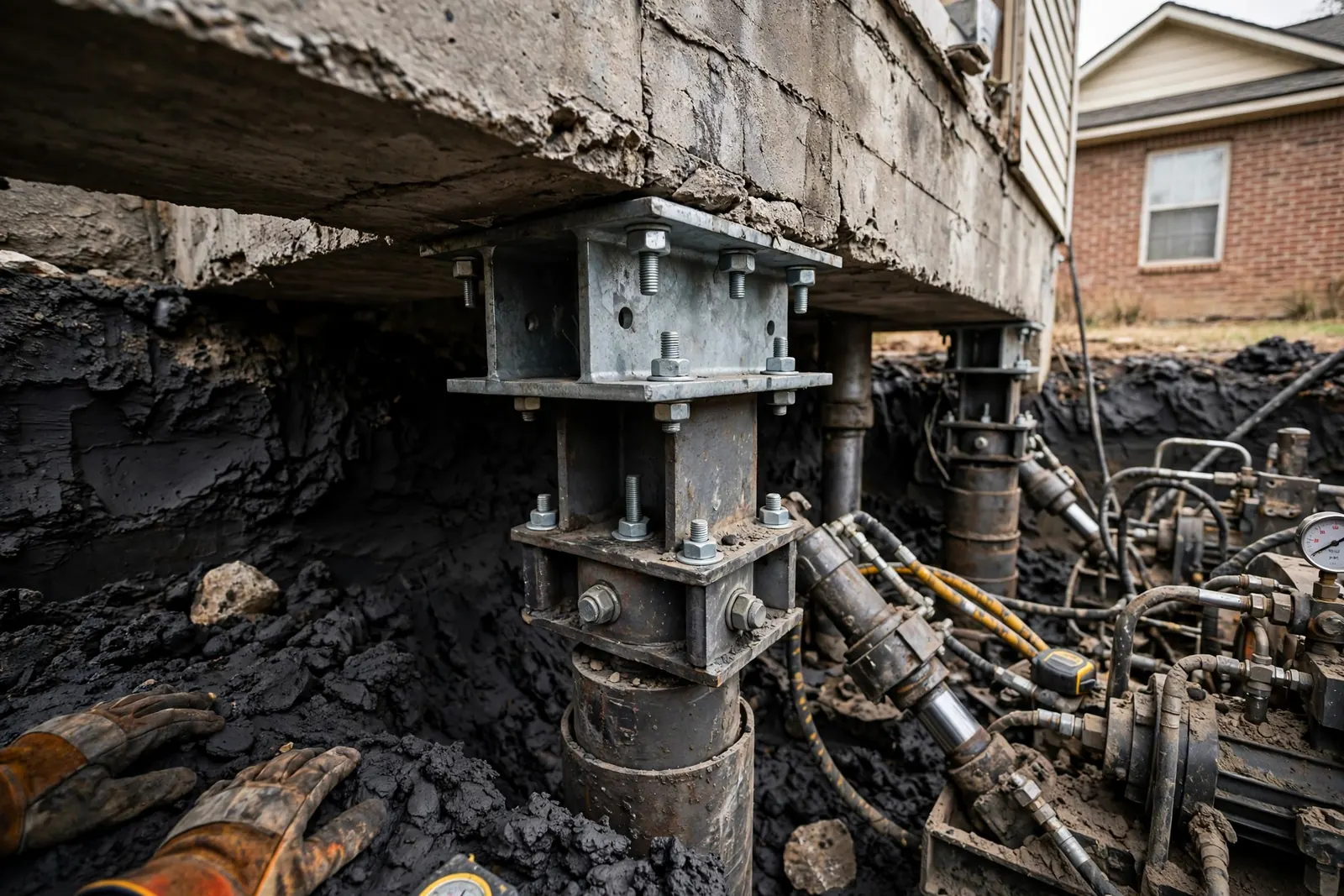
Most slab repairs are done from outside the house. We dig beside the footing, set piers at the points the readings call for, and lift the perimeter back to where it started. Exterior work keeps the mess in the yard, where it belongs. Interior sections are different. When the middle of a slab drops, the piers have to go under the middle, which means small, contained openings through the floor inside. We tunnel from outside where the layout allows it, because nobody wants their floors opened. Where tunneling is not possible, we cut clean, dust-controlled openings, do the pier work, and patch the concrete so your flooring contractor has a sound surface to work on. We will tell you which route your house needs at the evaluation, before you agree to anything.
The concrete question
Concrete foundation repair and slab foundation repair are the same conversation in Burleson: the slab is the concrete, and the repair is what goes under it. What we do not do is pour new concrete on top of a dropped slab and call it fixed. A mudjacking or foam lift can raise a light slab section for a while, and for a sidewalk or a driveway that can be the right tool. Under a house, on this clay, a surface lift without deep support usually buys a season or two before the same corner drops again. The readings tell us whether your slab is a candidate for a lift-only approach or needs piers to refusal. We will show you the numbers either way.
How a slab job runs
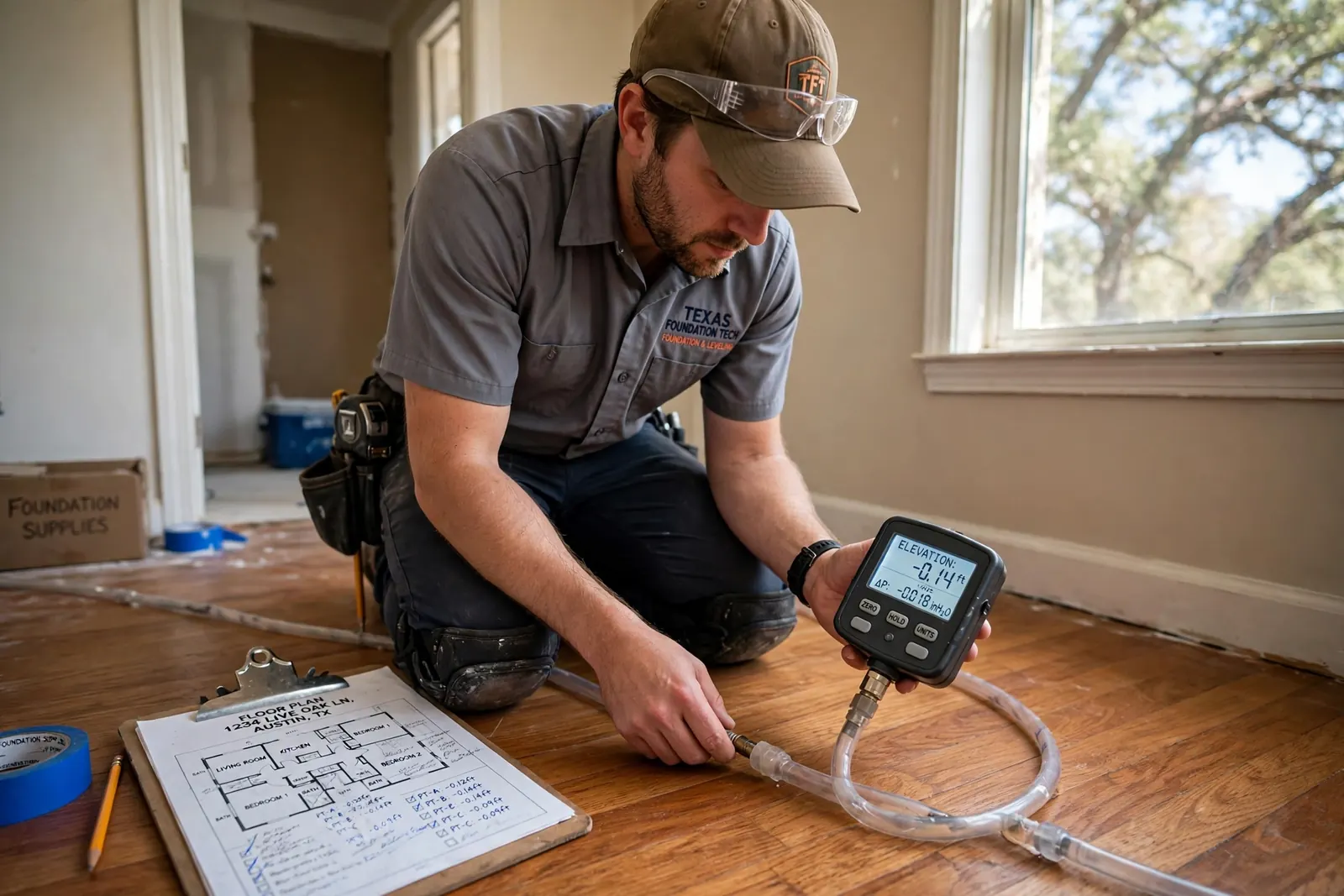
It starts with the survey: elevation readings on a grid across every room, drawn as a contour map of your floor. The map sets the pier layout, usually along the dropped wall or corner, spaced by what the footing needs rather than a sales target. On dig day we open the pier holes, drive steel piers or press concrete pilings segment by segment until the ground refuses them, then lift in small, even passes while a second set of readings watches the floor come up. Cracks in the slab are mapped before the lift and checked again after it. When the floor reads right, we lock the piers, backfill, and grade the soil back against the house so water runs away from the footing instead of into the pier holes. Most slab jobs take one to three days. You live in the house the whole time.
Straight Answers
Questions about slab repair
How many piers will my slab need?
Only the survey can say. Pier count follows the drop: a corner that fell an inch might take four to six piers, a whole side can take ten or more. Anybody who quotes a pier count from a photo or a phone call is guessing with your money. Our count comes off your contour map, and the quote is flat.
Will lifting crack my floors or walls?
A controlled lift moves the house in small, even passes, and most cosmetic cracks close as it comes up. There is always some risk to brittle finishes when a house that has sat dropped for years moves back, and we will point at the specific spots we are watching before we start. Leaving it dropped guarantees the damage keeps growing; lifting stops it.
What is the difference between steel piers and pressed pilings?
Steel piers are driven deep to load-bearing ground and locked to the footing with a bracket; they are our standard for heavy slab homes on deep clay. Pressed pilings are concrete segments pushed in using the house's own weight until the soil refuses them. Both work. Your soil depth and your house pick the right one, and our pier systems guide walks through all three systems, helical included.
Does slab repair come with a warranty?
Yes. Our pier work carries a lifetime warranty that stays with the house when you sell, with no transfer fee. Your pier map and your before-and-after readings stay on file so the record is complete for the next owner.
Keep Reading
Related Services
Foundation RepairPiers under the low side, a controlled lift on hydraulics, and a floor that reads level when we are done. That is the whole job, done right.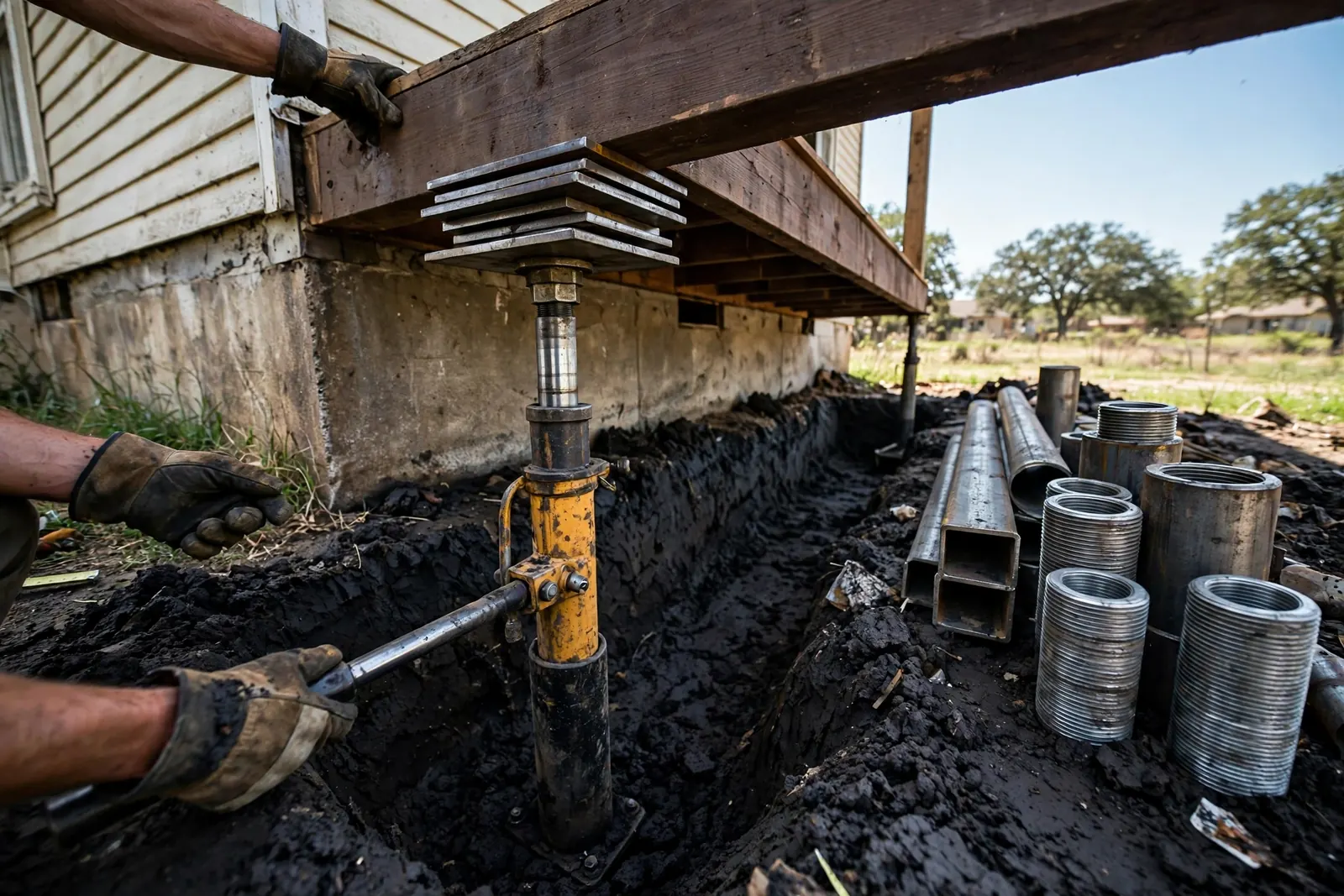 House LevelingThe whole house brought back to level, room by room, reading by reading. Doors close again. Floors stop sloping. Done.
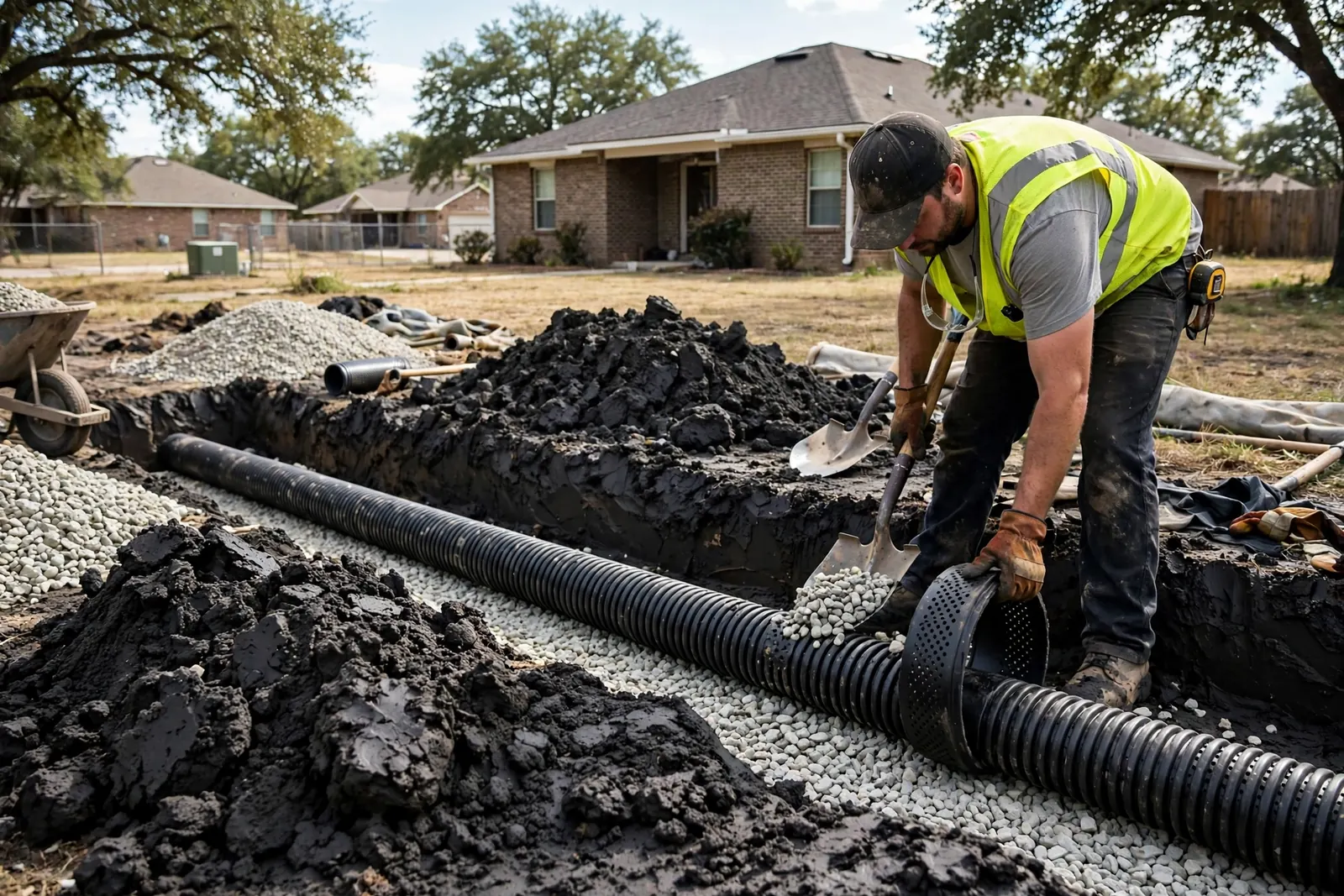 Drainage & French DrainsWater is the cause. Drains are the cure. We dig the trenches nobody wants to dig and grade the yard so water leaves.
Get the Floor Read
Tell us what the house is doing and we will call you back to set the free evaluation. Prefer to talk? Call (682) 439-9099.
Get a Free Evaluation
We measure the whole floor, show you the numbers, and quote it flat. It costs you nothing.