Home FAQs
Foundation Repair FAQs
The questions below are the ones we actually get at kitchen tables across Burleson, Crowley, Joshua, Alvarado, Cleburne and Mansfield. Straight answers, in the same words we use in person. If yours is not here, call (682) 439-9099 and ask it directly.
Straight Answers
Frequently Asked Questions
What does foundation repair cost?
Most homes we repair land between $4,500 and $12,000 all-in, with smaller corner jobs under that and big whole-perimeter jobs over it. The full breakdown, per pier and per job, is in our foundation repair cost guide. Your own number comes from your free elevation survey and is quoted flat, in writing, before work starts.
Is the evaluation really free?
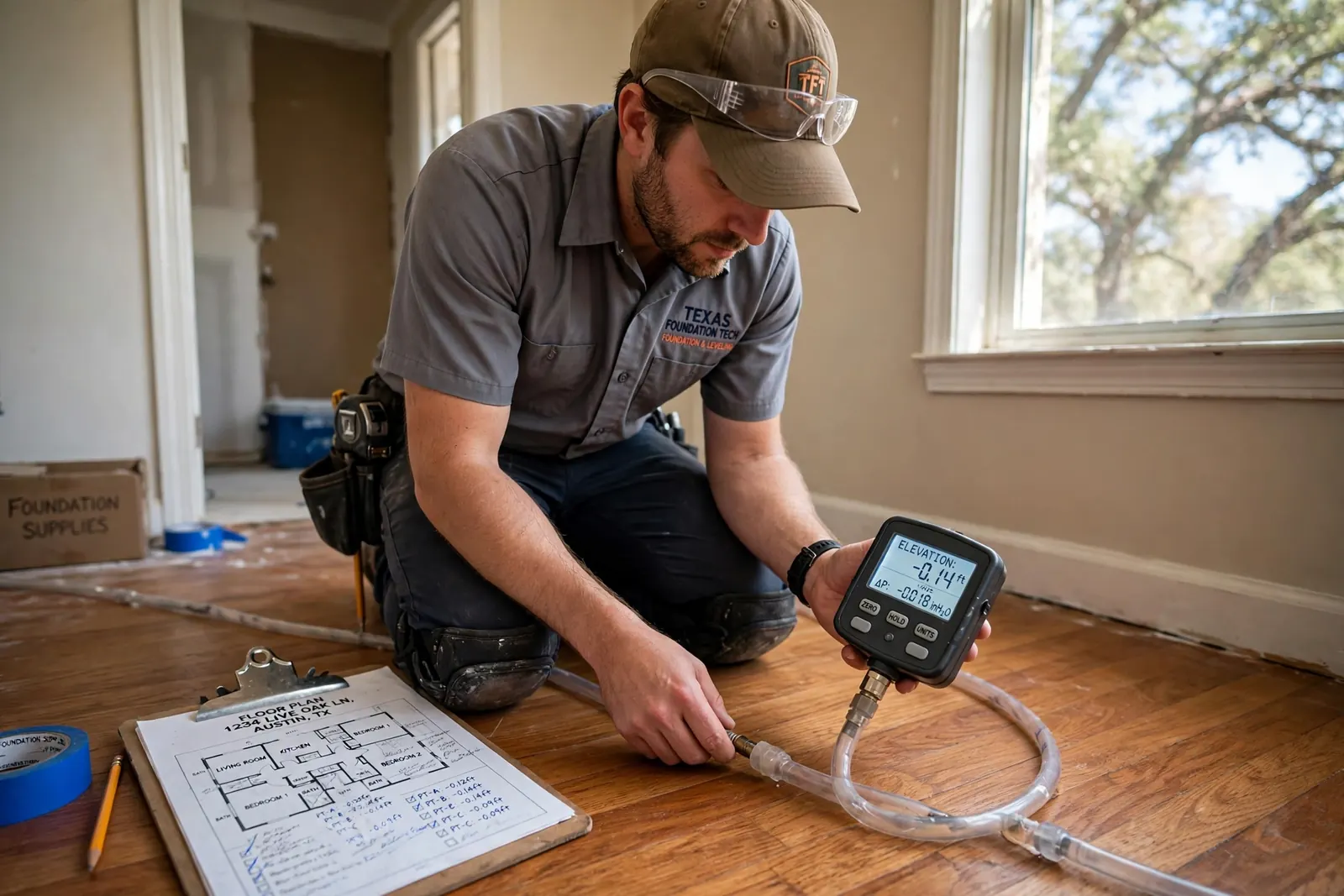
Yes. The elevation readings, the contour map of your floor and the written verdict are yours to keep with no purchase attached. It is our whole sales method: show you the numbers and let them make the case.
How do I know if I need piers at all?
The survey knows. If your floor reads level and supported, you do not need piers, whatever your cracks look like, and we will tell you so. If a section has dropped, the map shows where and how far, and piers are how that section gets carried again.
How long does foundation repair take?
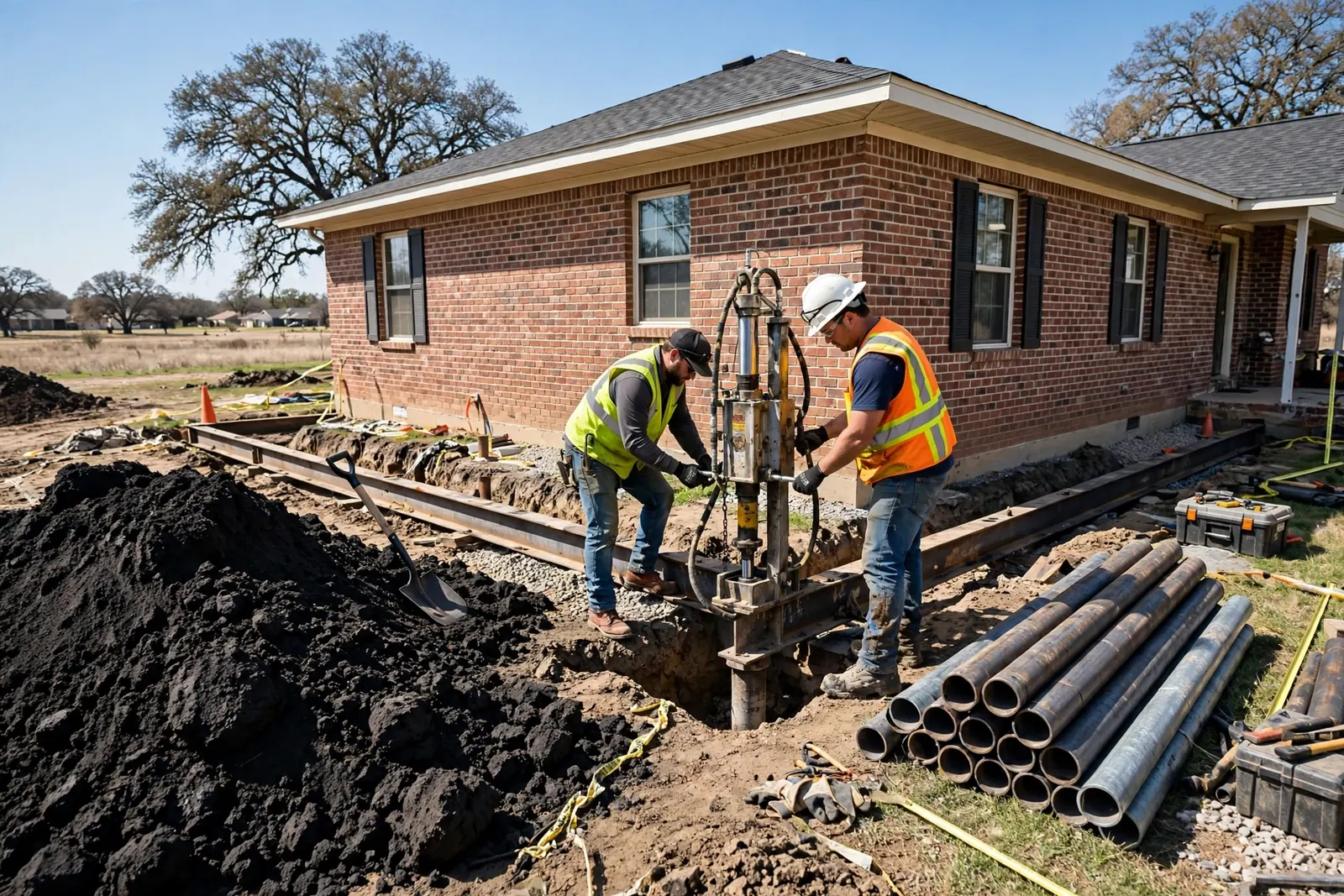
Most slab pier jobs run one to three days. Pier and beam structural work typically runs two to four. Encapsulation adds days depending on size. You live in the house throughout; there is noise and digging, but no moving out.
What does the lifetime warranty cover?
The pier work: if a section we piered moves again, we return and adjust it. The warranty stays with the house when you sell, transfers at no fee, and your pier map and before-and-after readings stay on file with us. It is written into your paperwork, not a verbal promise.
Will lifting my house crack walls or floors?
A controlled lift moves the house in small, even passes, and most existing cracks close as it returns to level. Brittle finishes can occasionally crack further when a long-dropped house moves back; we point out the risk spots with you before the lift begins. What is guaranteed to keep cracking is leaving it dropped.
Do you sell my information or buy leads?
Neither. Your call and your form come to one local crew, ours. We never sell a lead, and we do not buy them from marketplaces. The number on this site is the only number involved.
Can drainage really fix a foundation problem?
Sometimes it is the whole fix, when water is the cause and the house has not yet dropped. Drainage also protects pier work from the moisture swings that caused the drop. What drainage cannot do is lift a settled corner. The survey separates the two cases honestly. As a rule of thumb: water work answers problems measured in moisture, pier work answers problems measured in inches of drop, and a house showing both gets both, sequenced water-aware so the lift is not fighting the next storm season.
What happens at the free evaluation, step by step?
We walk the perimeter with you, take elevation readings across the floor, draw the contour map, check the crawl space where there is one, and trace the yard's water. Then we sit down and read the map together. About an hour, no obligation, and the map is yours either way.
Should I water my foundation?
In a Burleson drought, a consistent soaker routine around the whole perimeter helps the edge soil stay near the slab instead of pulling away from it. It is maintenance, not repair: it cannot recover a drop that already happened. We will show you how to set it up at the evaluation if your soil calls for it.
I am buying a house. Can you inspect it first?
Yes, and we recommend it. A free inspection during your option period gives you measured facts, a contour map and a written verdict while you can still negotiate with them. Sellers use the same inspection for documented answers instead of arguments.
My cracks open in summer and close in winter. Is that normal?
On North Texas clay, mostly yes: the soil shrinks in the dry months and swells back with the rains, and hairline cracks breathe with it. The pattern to watch is a crack that opens further each summer and never fully closes. That ratchet means the soil is not recovering under one section, and a survey will show whether the section has started to stay down. Breathing is weather. Ratcheting is settlement.
Which pier type is best for my house?
The one matched to your soil depth, your access and your budget, in that order. Steel reaches deepest and suits the heavier two-story plans; pressed concrete pilings handle most single-story slab work at a lower price; helicals serve tight access and lighter structures. We drive more than one system, so the recommendation can follow your readings instead of our inventory. The pier systems guide lays out the trade-offs without a sales filter.
Do I need a permit, and do you handle it?
Foundation repair permit requirements vary by town, and where your town requires one, we handle the paperwork and the inspection scheduling as part of the job. Engineering letters, where a lender, insurer or buyer asks for one, are arranged through an independent licensed engineer; independent matters, because the letter should come from someone with no stake in selling you piers.
Still Deciding? Ask the Crew
Tell us what the house is doing and we will call you back to set the free evaluation. Prefer to talk? Call (682) 439-9099.
Get a Free Evaluation
We measure the whole floor, show you the numbers, and quote it flat. It costs you nothing.